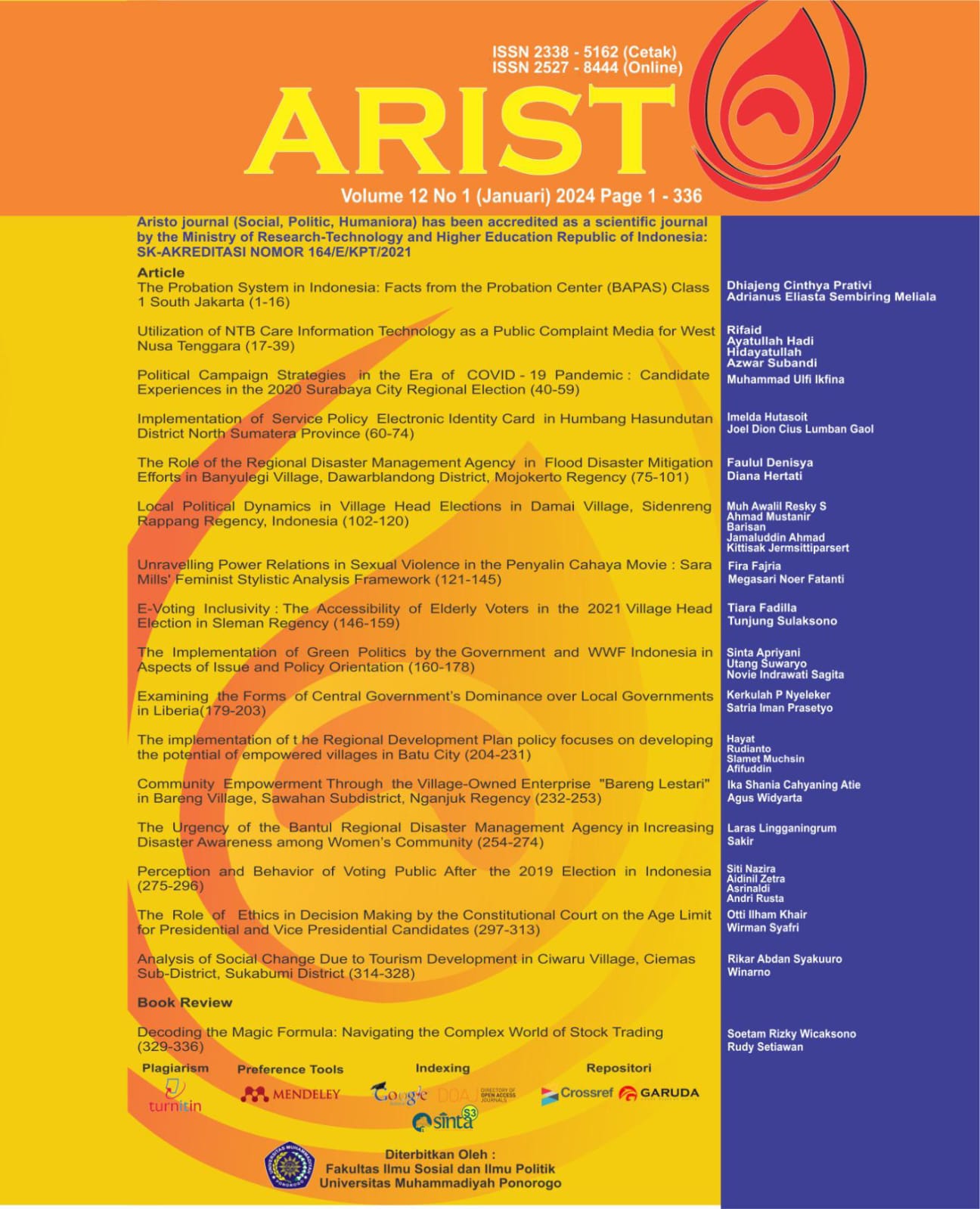
Local Political Dynamics in Village Head Elections in Damai Village, Sidenreng Rappang Regency, Indonesia
DOI:
https://doi.org/10.24269/ars.v12i1.7637Abstract
This study aims to determine the dynamics of local politics in the 2021 Election of Peaceful Village Heads in Sidenreng Rappang Indonesia. This research uses a qualitative descriptive method. Data collection techniques used were observation, interviews, field notes, and documentation. Resource persons were selected by purposive sampling. Data analysis namely data reduction, data presentation, and conclusions. Data analysis, namely data reduction, data presentation and conclusions displayed through Nvivo 12 Plus Software visualization. NVivo 12 Plus was chosen because it is capable of producing qualitative text data in the form of attractive data visualizations. The results of this study indicate that the local political dynamics that occurred in the Peace Village head election led to polarization in the village community structure. The election of the village head still leaves a mark in which there has been a rift in relations between the people who still have close family ties. The dynamics occur in three phases, namely pre-election, implementation of the election, and post-election. The behavior of the voting community in Damai Village is still dominated by the behavior of traditional voters. The occurrence of community polarization in Damai Village is the result of the political behavior of the people who are still traditional.Downloads
Download data is not yet available.
References
Almahdali, H., Mustanir, A., Katili, A. Y., Yunus, N. R., Tribakti, I., Rifa’i, I. J., Andika, A., Ibrahim, M. M., Saragih, G. M., & Utama, A. S. (2023). Sistem Politik Indonesia. PT. Global Eksekutif Teknologi.
Budiardjo, M. (2008). Dasar-Dasar Ilmu Politik (Vol. 1, Issue 1). Gramedia Pustaka Utama. http://journal.um-surabaya.ac.id/index.php/JKM/article/view/2203
Calvo, E., Ventura, T., Aruguete, N., & Waisbord, S. (2023). Winning! Election returns and engagement in social media. PLoS ONE, 18(3 March). https://doi.org/10.1371/journal.pone.0281475
Cipullo, D., & Le Moglie, M. (2022). To vote, or not to vote? Electoral campaigns and the spread of COVID-19. European Journal of Political Economy, 72(May 2021), 102118. https://doi.org/10.1016/j.ejpoleco.2021.102118
DiSalvo, D. (2022). Interest groups, local politics, and police unions. Interest Groups and Advocacy, 11(2), 263–277. https://doi.org/10.1057/s41309-021-00146-9
Fitriyah. (2015). Cara Kerja Politik Uang (Studi Kasus Pilkada dan Pilkades di Kabupaten Pati) dalam Politika.
Gaisbauer, F., Pournaki, A., Banisch, S., & Olbrich, E. (2021). Ideological differences in engagement in public debate on Twitter. PLoS ONE, 16(3 March), 1–18. https://doi.org/10.1371/journal.pone.0249241
Grant, M. D., Flores, A., Pedersen, E. J., Sherman, D. K., & Van Boven, L. (2021). When election expectations fail: Polarized perceptions of election legitimacy increase with accumulating evidence of election outcomes and with polarized media. PLoS ONE, 16(12 December), 1–17. https://doi.org/10.1371/journal.pone.0259473
Halili. (2009). Praktik Politik Uang dalam Pemilihan Kepala Desa (Studi di Desa Pekandangan Barat Bluto Sumenep Madura).
Heryanto, G. G. (2019). Panggung Komunikasi Politik Dilema antara Idealitas dan Realitas Politik. IRCiSoD.
Leromain, E., & Vannoorenberghe, G. (2022). Voting under threat: Evidence from the 2020 French local elections. European Journal of Political Economy, 75(March), 102204. https://doi.org/10.1016/j.ejpoleco.2022.102204
Muhtadi, B. (2013). Politik Uang dan Dinamika Elektoral di Indonesia: Sebuah Kajian Awal Interaksi antara “Party-ID†dan Patron-Klien dalam Partai Politik dalam Timbangan.
Neihouser, M., Sandri, G., Von Nostitz, F., & Haute, T. (2022). Political information consumption and electoral turnout during COVID: the case of the 2020 municipal elections. French Politics, 20(2), 182–209. https://doi.org/10.1057/s41253-022-00173-1
Ravyansah, Fadli, Z., Almahdali, H., Tampubolon, M., Irawan, B., Ismaya, Kusnadi, I. H., Afdhal, Mustanir, A., Sari, A. R., Sakir, A. R., & Nainggolan, A. A. (2022). Pengantar Ilmu Politik : ENVIRONMENT.
Å aradÃn, P., Lebeda, T., Lysek, J., Soukop, M., Ostrá, D., & Lebedová, E. (2021). Post-election survey data: Local democracy and the 2018 local elections in the Czech Republic. Data in Brief, 36. https://doi.org/10.1016/j.dib.2021.107039
Sugiyono. (2015). Metode Penelitian Kombinasi (Mix Methods). Alfabeta.
T, S. (2015). Kekuasaan Patrimonial Politik Lokal; Analisis Relasi Patron-Klien pada Pemilihan Kepala Desa Aeng Tong-Tong Saronggi Sumenep.
VanDusky-Allen, J. A., Utych, S. M., & Catalano, M. (2022). Partisanship, Policy, and Americans’ Evaluations of State-Level COVID-19 Policies Prior to the 2020 Election. Political Research Quarterly, 75(2), 479–496. https://doi.org/10.1177/10659129211056374
Wegschaider, K., Gross, M., & Schmid, S. (2022). Studying politics at the local level in Germany: a tale of missing data. Zeitschrift Fur Vergleichende Politikwissenschaft, 16(4), 753–768. https://doi.org/10.1007/s12286-022-00551-7
Wittwer, S. (2023). How Strong is Local Politics’ Grip on Local Economic Development? The Case of Swiss Small and Medium-Sized Towns. Urban Affairs Review, 59(2), 476–505. https://doi.org/10.1177/10780874211056519
Wüest, R., & Pontusson, J. (2022). Voter preferences as a source of descriptive (mis)representation by social class. European Journal of Political Research, 61(2), 398–419. https://doi.org/10.1111/1475-6765.12511
Budiardjo, M. (2008). Dasar-Dasar Ilmu Politik (Vol. 1, Issue 1). Gramedia Pustaka Utama. http://journal.um-surabaya.ac.id/index.php/JKM/article/view/2203
Calvo, E., Ventura, T., Aruguete, N., & Waisbord, S. (2023). Winning! Election returns and engagement in social media. PLoS ONE, 18(3 March). https://doi.org/10.1371/journal.pone.0281475
Cipullo, D., & Le Moglie, M. (2022). To vote, or not to vote? Electoral campaigns and the spread of COVID-19. European Journal of Political Economy, 72(May 2021), 102118. https://doi.org/10.1016/j.ejpoleco.2021.102118
DiSalvo, D. (2022). Interest groups, local politics, and police unions. Interest Groups and Advocacy, 11(2), 263–277. https://doi.org/10.1057/s41309-021-00146-9
Fitriyah. (2015). Cara Kerja Politik Uang (Studi Kasus Pilkada dan Pilkades di Kabupaten Pati) dalam Politika.
Gaisbauer, F., Pournaki, A., Banisch, S., & Olbrich, E. (2021). Ideological differences in engagement in public debate on Twitter. PLoS ONE, 16(3 March), 1–18. https://doi.org/10.1371/journal.pone.0249241
Grant, M. D., Flores, A., Pedersen, E. J., Sherman, D. K., & Van Boven, L. (2021). When election expectations fail: Polarized perceptions of election legitimacy increase with accumulating evidence of election outcomes and with polarized media. PLoS ONE, 16(12 December), 1–17. https://doi.org/10.1371/journal.pone.0259473
Halili. (2009). Praktik Politik Uang dalam Pemilihan Kepala Desa (Studi di Desa Pekandangan Barat Bluto Sumenep Madura).
Heryanto, G. G. (2019). Panggung Komunikasi Politik Dilema antara Idealitas dan Realitas Politik. IRCiSoD.
Leromain, E., & Vannoorenberghe, G. (2022). Voting under threat: Evidence from the 2020 French local elections. European Journal of Political Economy, 75(March), 102204. https://doi.org/10.1016/j.ejpoleco.2022.102204
Muhtadi, B. (2013). Politik Uang dan Dinamika Elektoral di Indonesia: Sebuah Kajian Awal Interaksi antara “Party-ID†dan Patron-Klien dalam Partai Politik dalam Timbangan.
Neihouser, M., Sandri, G., Von Nostitz, F., & Haute, T. (2022). Political information consumption and electoral turnout during COVID: the case of the 2020 municipal elections. French Politics, 20(2), 182–209. https://doi.org/10.1057/s41253-022-00173-1
Ravyansah, Fadli, Z., Almahdali, H., Tampubolon, M., Irawan, B., Ismaya, Kusnadi, I. H., Afdhal, Mustanir, A., Sari, A. R., Sakir, A. R., & Nainggolan, A. A. (2022). Pengantar Ilmu Politik : ENVIRONMENT.
Å aradÃn, P., Lebeda, T., Lysek, J., Soukop, M., Ostrá, D., & Lebedová, E. (2021). Post-election survey data: Local democracy and the 2018 local elections in the Czech Republic. Data in Brief, 36. https://doi.org/10.1016/j.dib.2021.107039
Sugiyono. (2015). Metode Penelitian Kombinasi (Mix Methods). Alfabeta.
T, S. (2015). Kekuasaan Patrimonial Politik Lokal; Analisis Relasi Patron-Klien pada Pemilihan Kepala Desa Aeng Tong-Tong Saronggi Sumenep.
VanDusky-Allen, J. A., Utych, S. M., & Catalano, M. (2022). Partisanship, Policy, and Americans’ Evaluations of State-Level COVID-19 Policies Prior to the 2020 Election. Political Research Quarterly, 75(2), 479–496. https://doi.org/10.1177/10659129211056374
Wegschaider, K., Gross, M., & Schmid, S. (2022). Studying politics at the local level in Germany: a tale of missing data. Zeitschrift Fur Vergleichende Politikwissenschaft, 16(4), 753–768. https://doi.org/10.1007/s12286-022-00551-7
Wittwer, S. (2023). How Strong is Local Politics’ Grip on Local Economic Development? The Case of Swiss Small and Medium-Sized Towns. Urban Affairs Review, 59(2), 476–505. https://doi.org/10.1177/10780874211056519
Wüest, R., & Pontusson, J. (2022). Voter preferences as a source of descriptive (mis)representation by social class. European Journal of Political Research, 61(2), 398–419. https://doi.org/10.1111/1475-6765.12511
Downloads
Published
2023-11-16
Issue
Section
Artikel
License
Authors Who Publish whit this journal agree to the following term :
Copyright on any article is retained by the Journal
- Author grant the journal right of first publication with the work simultaneously licensed under a Creative Commons Attribution License that allows others to share the work with an acknowledgement of the work's authorship and initial publication in this;
- Authors are able to enter into separate, additional contractual arrangements for the non-exclusive distribution of the journal's published version of the work (e.g., post it to an institutional repository or publish it in a book), with an acknowledgement of its initial publication in this journal;
- Authors are permitted and encouraged to post their work online (e.g., in institutional repositories or on their website) prior to and during the submission process, as it can lead to productive exchanges, as well as earlier and greater citation of published work;
- Every accepted manuscript should be accompanied by Copyright Transfer Agreement (CTA), prior to the article publication. CTA can be downloaded here;
=====================================================================================================
Penulis yang mempublikasikan naskahnya pada Jurnal ini menyetujui ketentuan berikut:
Hak cipta pada setiap artikel adalah milik jurnal.
- Penulis mengakui bahwa Jurnal ARISTO berhak sebagai mempublikasikan pertama kali dengan bekerja secara bersamaan dibawah Creative Commons Attribution License yang memungkinkan orang lain untuk membagi pekerjaan dengan pengakuan dari pengarang dan publikasi pertama dalam jurnal ARISTO;
- Penulis dapat memasukan tulisan secara terpisah, mengatur distribusi non-ekskulif  dari naskah yang telah terbit di jurnal ini kedalam versi yang lain (misal: dikirim ke respository institusi penulis, publikasi kedalam buku, dll), dengan mengakui bahwa naskah telah terbit pertamakali pada Jurnal ARISTO;
- Penulis diperbolehkan dan didorong untuk mengirimkan pekerjaan mereka secara daring (misal melalui respositories atau website instansi penulis) sebelum atau selama proses pengiriman pada Jurnal ARISTO berlangsung, ini dapat menjadikan pertukaran informasi yang sangat produktif, dan serta menjadikan kutipan yang banyak dari publikasi;
- Setiap naskah yang diterima wajib menyertakan Perjanjian Pemindahan Hakcipta (Copyright Transfer Agreement/CTA), sebelum artikel diterbitkan. CTA dapat diunduh di sini


