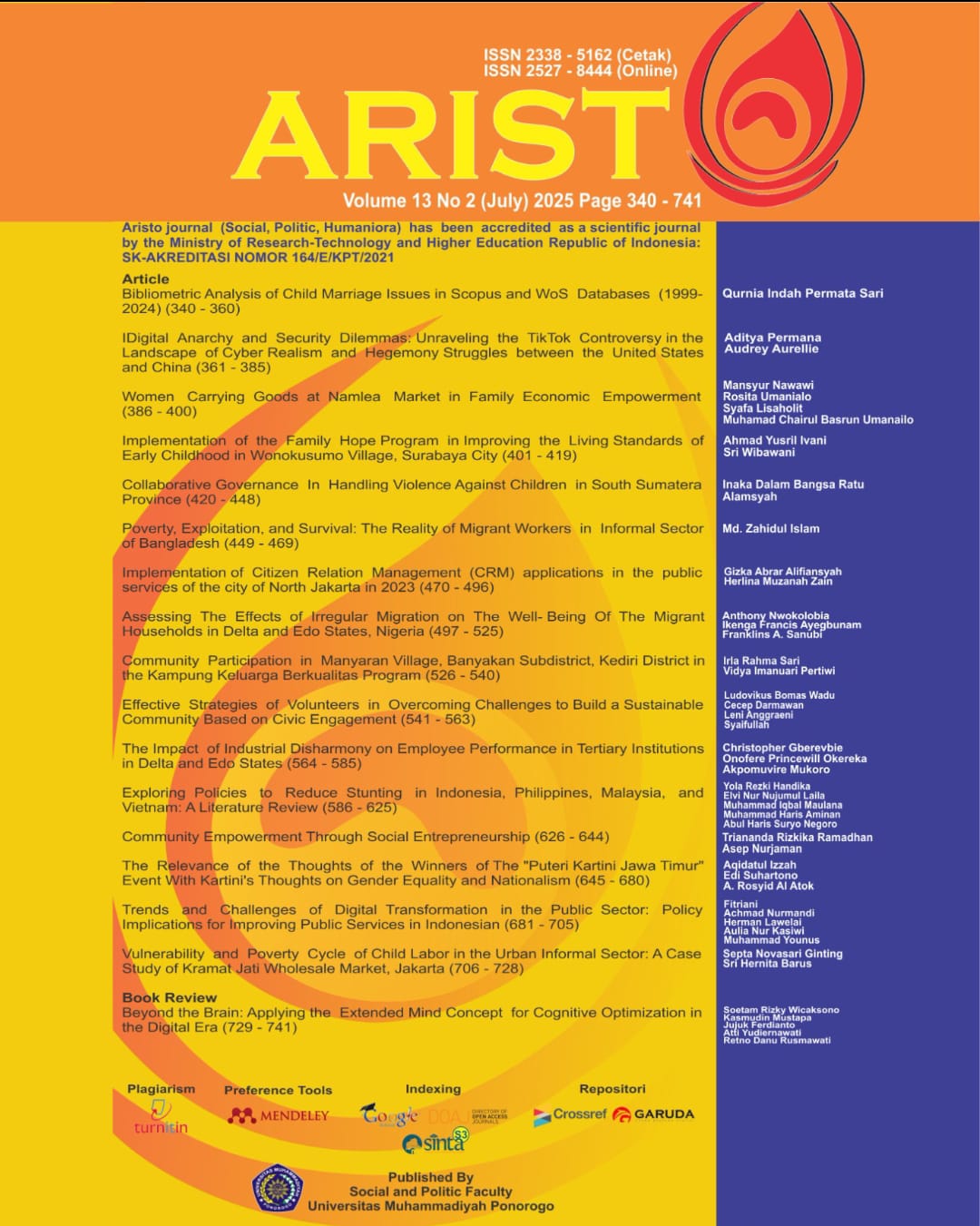
The Impact of Industrial Disharmony on Employee Performance in Tertiary Institutions in Delta and Edo States
DOI:
https://doi.org/10.24269/ars.v13i2.10886Abstract
Although industrial harmony is essential for achieving academic excellence and maintaining a productive educational system in Nigeria, incidents of industrial disharmony in tertiary institutions have become increasingly frequent, intense, widespread, and prolonged. In light of this, the study investigated the causal relationship between industrial disharmony and employee performance in selected tertiary institutions in Delta and Edo States. Utilizing a cross-sectional research design, the study employed a structured survey instrument to collect data from a sample of 243 employees, randomly selected from Delta State University, Abraka; University of Benin, Benin City; Delta State Polytechnic, Oghara; Auchi Polytechnic, Auchi; Delta State College of Education, Warri; and the College of Education, Igueben, Edo State. The research was grounded in the industrial relations system theory, which provides an analytical framework for understanding a broad range of industrial relations practices and phenomena. Six hypotheses were tested at a 0.05 level of significance, with data analysis conducted using the Statistical Package for Social Sciences (SPSS, version 23.0, 2020). Pearson’s correlation coefficient and linear regression analysis were used to test the hypotheses. The findings revealed that poor implementation of promotion policies significantly increased grievance frequency; non-implementation of agreements significantly heightened the occurrence of strike actions; union leaders’ integrity had a significant positive impact on employee welfare; and industrial union strikes significantly contributed to poor employee performance in tertiary institutions in Delta and Edo States. The study concluded that industrial harmony positively and significantly affects employee performance in these institutions. Among the recommendations, the study emphasized the importance of sincere engagement between tertiary institutions and workers’ unions through collective bargaining. This approach would help workers better understand the challenges and constraints faced in addressing their demands. Moreover, fostering a harmonious work environment relies more on mutual understanding between unions and institutional management rather than on fully satisfying the demands of both parties, which may not always be feasible.Downloads
Download data is not yet available.
References
Adagbabiri, M. M., & Okolie, U.C. (2019). Job Design and Employee Performance in Nigeria Bottling Company Plc, Benin City. Annals of Spiru Haret University. Economic Series, 19(3), 65-89.
Adejuwon, K. D. (2020). Improving civil service performance in Nigeria through the application of balanced scorecard methodology. University of Mauritius Research Journal, 22(12), 280 - 309.
Adekiya, A. A. (2015). Perceived Job Insecurity: Its Individual, organizational and societal effects. European Scientific Journal, 1(1), 104 -111.
Afrin, S., Asyraf, B., Mohd, K., M., Yusof, M. F., Hassan, M. S., Islam, M. A., & Khairuddin, K.N.B. (2023). Investigating the determinants of employee performance for sustainability: A study on the bangladesh insurance industry. Sustainability, 15, 1 – 16.
Ajewole, I. P. (2014). Managing labour unrest in Nigerian universities. Journal of Education and Policy Review, 6(2), 75 – 90.
Akhaukwa, J. R., Maru, L., & Byaruhang J. (2013). Effect of Collective Bargaining Process on Industrial Relations environment in Public Universities in Kenya. Mediterranean Journal of Social Sciences, 4(2), 107 – 124.
Badom, M. P. (2019). Oil and gas workers’ industrial actions and impacts on commuters in Rivers State, Nigeria. (PhD thesis). School of graduate studies, university of Port Harcourt, Nigeria.
Badom, M. P., Anele, K. A. & Badey, D. (2018). Oil and gas workers’ industrial actions as precursor of development in Nigeria. International Journal of Social Science and Humanities Research. 6(4), 835- 843.
Bassey, A. O., Attah, F. M., & Edet, H. S. (2019). Industrial democracy and work place slavery: An analysis of public and private organizations in Nigeria. European Academic Research, 7(1), 417 – 426.
Fejoh, J., Boyede, M. A., Adesanwo, E. O., & Onanuga, P. A. (2021). Industrial disharmony and sustainable development goals of state government-owned tertiary institutions in Southwest Nigeria. Journal of Education in Black Sea Region, 7(1), 72 -84.
Girigiri, B. W., & Badom, P. M. (2021). Industrial harmony and work discontent: Employer and
Ibukun. O. K. (2019). Effects of industrial conflicts on employees’ performance in a private sector organization: A case of Ikeja electricity distribution company Plc. European Journal of Business and Management, 11(24), 117 – 125.
Igbaji, P. (2019). Industrial conflict and goal achievements of tertiary institutions in Cross River State, Nigeria. Journal of Research in National Development, 7(2), 122-135.
Kolawole, I. O. (2019). Effects of Industrial conflicts on employees’ performance in a private sector organization (A case of Ikeja Electricity Distribution Company Plc). European Journal of Business and Management, 11(24), 117 -125.
Macaulay, J.D.A. (2017). Nature of collective agreements in Nigeria: A panoramic analysis of inherent implementation challenges. Global Journal of Politics and Law Research, 5 (6), 19 -28.
Mojalefa, M. L. (2021). Factors contributing to industrial conflicts within higher education institutions in Lesotho: A case of the national university of Lesotho. Business and Economic Research, 11(2), 319 – 329.
Mukoro, S. A. (2013). Improving industrial harmony and staff performance in a school organization through effective communication. International Journal of Scientific Research in Education, 6(3), 263-270.
Murwirapachena, G. (2014). Exploring the incidents of strikes in post-apartheid South Africa. International Business and Economics Research Journal, 13(3), 553-560.
Ndubuisi-Okolo, P. U., Onyeizugbe, C., & Anekwe, R. I. (2022). Industrial harmony: Antidote to workplace deviant behaviour among lecturers in Nigeria. Asian Journal of Economics, Business and Accounting, 22(2), 31 – 39.
Nkiinebari, N. P. (2015). Employee engagement and workplace harmony in Nigeria Civil Service. International journal of innovative research and development, 4(2), 17 -37.
Obiekwe, O., Felix, O., & Izim, B. (2018). Industrial relations environment in Nigeria: Implications for managers in Nigeria workplace. International Journal of Economics and Business Management, 4 (1), 1 – 10.
Odoh, C. O., & Moluno, S. U. (2023). Cases and impacts of industrial disharmony on employee performance in tertiary institutions in Nigeria. Journal of Public Administration, Finance and Law, 28, 316 – 327.
Okafor, L., Okorie, E. F., & Lifu, F. L. (2018). Workplace democracy and performance of employees in public institutions in Nigeria: How far, so far? European Journal of Business and Management, 10(14), 85 -89.
Okoli, I. E., Okeke, K. C., & Nuel-Okoli, C. M. (2017). Conflict management and employee commitment among academic staff in public universities in south east, Nigeria. International Journal of Advanced Academic and Educational Research, 13(2), 84 – 103.
Okolie, U. C., & Omole, O. G. (2017). Impact of teamwork on employees’ job satisfaction and performance among polytechnic teachers: A case of Auchi Polytechnic, Auchi, Edo State. Human Resource Management Journal, 9 (1), 56-72.
Onuegbu, C. (2014). Social dialogue: Industrial harmony and national development. This Day Newspaper,
Onyeizugbe, C. U., Aghara, V., Olohi, E. S., & Chidiogo, A. P. (2018). Industrial harmony and employee performance in food and beverage firms in Anambra State of Nigeria. International Journal of Managerial Studies and Research, 6(6), 22 -35.
Osamwonyi, I.O. & Ugiagbe, E.O. (2013). Harmonious industrial relations as a panacea for ailing enterprises in Nigeria. Journal of Asian Scientific Research, 3(3), 229-246.
Sholokwu, B. M., & W. O. Olori. (2021). Management practices and industrial harmony in oil and gas firms in Rivers State, Nigeria. International Journal of Advanced Academic Research | Social & Management Sciences, 2(11), 99-117.
Wahab, B. (2018). All the time ASUU has gone on strike since 1999. Retrieved from www.pulse.ng/communities/student/all-the-time-asuu-has-gone-on-strike-since-1999 on April 15, 2023.
Adejuwon, K. D. (2020). Improving civil service performance in Nigeria through the application of balanced scorecard methodology. University of Mauritius Research Journal, 22(12), 280 - 309.
Adekiya, A. A. (2015). Perceived Job Insecurity: Its Individual, organizational and societal effects. European Scientific Journal, 1(1), 104 -111.
Afrin, S., Asyraf, B., Mohd, K., M., Yusof, M. F., Hassan, M. S., Islam, M. A., & Khairuddin, K.N.B. (2023). Investigating the determinants of employee performance for sustainability: A study on the bangladesh insurance industry. Sustainability, 15, 1 – 16.
Ajewole, I. P. (2014). Managing labour unrest in Nigerian universities. Journal of Education and Policy Review, 6(2), 75 – 90.
Akhaukwa, J. R., Maru, L., & Byaruhang J. (2013). Effect of Collective Bargaining Process on Industrial Relations environment in Public Universities in Kenya. Mediterranean Journal of Social Sciences, 4(2), 107 – 124.
Badom, M. P. (2019). Oil and gas workers’ industrial actions and impacts on commuters in Rivers State, Nigeria. (PhD thesis). School of graduate studies, university of Port Harcourt, Nigeria.
Badom, M. P., Anele, K. A. & Badey, D. (2018). Oil and gas workers’ industrial actions as precursor of development in Nigeria. International Journal of Social Science and Humanities Research. 6(4), 835- 843.
Bassey, A. O., Attah, F. M., & Edet, H. S. (2019). Industrial democracy and work place slavery: An analysis of public and private organizations in Nigeria. European Academic Research, 7(1), 417 – 426.
Fejoh, J., Boyede, M. A., Adesanwo, E. O., & Onanuga, P. A. (2021). Industrial disharmony and sustainable development goals of state government-owned tertiary institutions in Southwest Nigeria. Journal of Education in Black Sea Region, 7(1), 72 -84.
Girigiri, B. W., & Badom, P. M. (2021). Industrial harmony and work discontent: Employer and
Ibukun. O. K. (2019). Effects of industrial conflicts on employees’ performance in a private sector organization: A case of Ikeja electricity distribution company Plc. European Journal of Business and Management, 11(24), 117 – 125.
Igbaji, P. (2019). Industrial conflict and goal achievements of tertiary institutions in Cross River State, Nigeria. Journal of Research in National Development, 7(2), 122-135.
Kolawole, I. O. (2019). Effects of Industrial conflicts on employees’ performance in a private sector organization (A case of Ikeja Electricity Distribution Company Plc). European Journal of Business and Management, 11(24), 117 -125.
Macaulay, J.D.A. (2017). Nature of collective agreements in Nigeria: A panoramic analysis of inherent implementation challenges. Global Journal of Politics and Law Research, 5 (6), 19 -28.
Mojalefa, M. L. (2021). Factors contributing to industrial conflicts within higher education institutions in Lesotho: A case of the national university of Lesotho. Business and Economic Research, 11(2), 319 – 329.
Mukoro, S. A. (2013). Improving industrial harmony and staff performance in a school organization through effective communication. International Journal of Scientific Research in Education, 6(3), 263-270.
Murwirapachena, G. (2014). Exploring the incidents of strikes in post-apartheid South Africa. International Business and Economics Research Journal, 13(3), 553-560.
Ndubuisi-Okolo, P. U., Onyeizugbe, C., & Anekwe, R. I. (2022). Industrial harmony: Antidote to workplace deviant behaviour among lecturers in Nigeria. Asian Journal of Economics, Business and Accounting, 22(2), 31 – 39.
Nkiinebari, N. P. (2015). Employee engagement and workplace harmony in Nigeria Civil Service. International journal of innovative research and development, 4(2), 17 -37.
Obiekwe, O., Felix, O., & Izim, B. (2018). Industrial relations environment in Nigeria: Implications for managers in Nigeria workplace. International Journal of Economics and Business Management, 4 (1), 1 – 10.
Odoh, C. O., & Moluno, S. U. (2023). Cases and impacts of industrial disharmony on employee performance in tertiary institutions in Nigeria. Journal of Public Administration, Finance and Law, 28, 316 – 327.
Okafor, L., Okorie, E. F., & Lifu, F. L. (2018). Workplace democracy and performance of employees in public institutions in Nigeria: How far, so far? European Journal of Business and Management, 10(14), 85 -89.
Okoli, I. E., Okeke, K. C., & Nuel-Okoli, C. M. (2017). Conflict management and employee commitment among academic staff in public universities in south east, Nigeria. International Journal of Advanced Academic and Educational Research, 13(2), 84 – 103.
Okolie, U. C., & Omole, O. G. (2017). Impact of teamwork on employees’ job satisfaction and performance among polytechnic teachers: A case of Auchi Polytechnic, Auchi, Edo State. Human Resource Management Journal, 9 (1), 56-72.
Onuegbu, C. (2014). Social dialogue: Industrial harmony and national development. This Day Newspaper,
Onyeizugbe, C. U., Aghara, V., Olohi, E. S., & Chidiogo, A. P. (2018). Industrial harmony and employee performance in food and beverage firms in Anambra State of Nigeria. International Journal of Managerial Studies and Research, 6(6), 22 -35.
Osamwonyi, I.O. & Ugiagbe, E.O. (2013). Harmonious industrial relations as a panacea for ailing enterprises in Nigeria. Journal of Asian Scientific Research, 3(3), 229-246.
Sholokwu, B. M., & W. O. Olori. (2021). Management practices and industrial harmony in oil and gas firms in Rivers State, Nigeria. International Journal of Advanced Academic Research | Social & Management Sciences, 2(11), 99-117.
Wahab, B. (2018). All the time ASUU has gone on strike since 1999. Retrieved from www.pulse.ng/communities/student/all-the-time-asuu-has-gone-on-strike-since-1999 on April 15, 2023.
Downloads
Published
2025-01-12
Issue
Section
Artikel
License
Authors Who Publish whit this journal agree to the following term :
Copyright on any article is retained by the Journal
- Author grant the journal right of first publication with the work simultaneously licensed under a Creative Commons Attribution License that allows others to share the work with an acknowledgement of the work's authorship and initial publication in this;
- Authors are able to enter into separate, additional contractual arrangements for the non-exclusive distribution of the journal's published version of the work (e.g., post it to an institutional repository or publish it in a book), with an acknowledgement of its initial publication in this journal;
- Authors are permitted and encouraged to post their work online (e.g., in institutional repositories or on their website) prior to and during the submission process, as it can lead to productive exchanges, as well as earlier and greater citation of published work;
- Every accepted manuscript should be accompanied by Copyright Transfer Agreement (CTA), prior to the article publication. CTA can be downloaded here;
=====================================================================================================
Penulis yang mempublikasikan naskahnya pada Jurnal ini menyetujui ketentuan berikut:
Hak cipta pada setiap artikel adalah milik jurnal.
- Penulis mengakui bahwa Jurnal ARISTO berhak sebagai mempublikasikan pertama kali dengan bekerja secara bersamaan dibawah Creative Commons Attribution License yang memungkinkan orang lain untuk membagi pekerjaan dengan pengakuan dari pengarang dan publikasi pertama dalam jurnal ARISTO;
- Penulis dapat memasukan tulisan secara terpisah, mengatur distribusi non-ekskulif  dari naskah yang telah terbit di jurnal ini kedalam versi yang lain (misal: dikirim ke respository institusi penulis, publikasi kedalam buku, dll), dengan mengakui bahwa naskah telah terbit pertamakali pada Jurnal ARISTO;
- Penulis diperbolehkan dan didorong untuk mengirimkan pekerjaan mereka secara daring (misal melalui respositories atau website instansi penulis) sebelum atau selama proses pengiriman pada Jurnal ARISTO berlangsung, ini dapat menjadikan pertukaran informasi yang sangat produktif, dan serta menjadikan kutipan yang banyak dari publikasi;
- Setiap naskah yang diterima wajib menyertakan Perjanjian Pemindahan Hakcipta (Copyright Transfer Agreement/CTA), sebelum artikel diterbitkan. CTA dapat diunduh di sini


